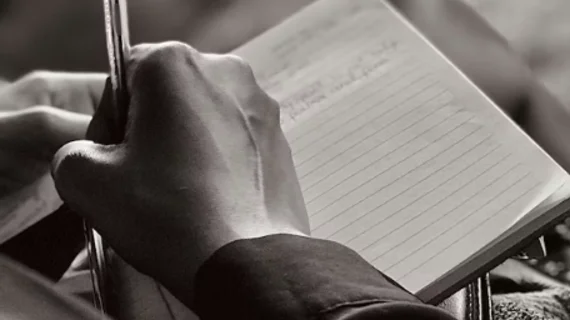
The Best Time of Day to Journal
Journaling advice usually lands on one of two sides: morning pages advocates who swear by early writing before the day begins, or evening reflection proponents who want to process the day while it’s fresh. Both camps have real cases to make, and both camps also have a blind spot: the best time to journal is not the same for everyone, and the time that works best for a given person depends on factors that journaling advice rarely addresses.
Chronotype — whether you’re naturally a morning person, an evening person, or somewhere in between — affects the quality of reflective thinking you have access to at different hours. Your current life circumstances determine what windows of time are actually available. What you want from journaling shapes when it makes the most sense to do it. And the goal of actually maintaining a practice long-term means the theoretical best time matters less than the time you’ll reliably use.
This guide works through all of these factors. Rather than prescribing a single answer, it gives you the framework to identify the timing that’s genuinely right for you.
Morning Journaling: The Case For
The morning journaling tradition has its most articulate advocate in Julia Cameron’s “morning pages” practice — three pages of longhand stream-of-consciousness writing done immediately upon waking, before the day and its demands intrude. The case Cameron makes, and that many practitioners confirm, is that the early morning has a particular quality of access to unfiltered material.
What Morning Offers
Before the day begins, you haven’t yet been shaped by the day’s events, interactions, and demands. The night’s processing — whatever cognitive and emotional work happens during sleep — is fresh and available. The particular noise of the active day hasn’t started yet. Many people find that the quality of thought available first thing in the morning is different from the quality available later — more associative, less defended, closer to the material that conscious daytime thinking tends to edit out.
For intention-setting, morning journaling has a practical advantage: you can use it to orient the coming day — to name what you want to bring to it, what you’re going into, what you want to be careful of. An entry that asks “how do I want to show up today?” is naturally a morning question. It loses its function if asked in the evening.
There’s also a sequencing argument: journaling first, before checking email or social media or any content that shapes your thinking, gives you access to your own mind before external inputs have their way with it. Many people find that post-phone, post-news morning journaling feels quite different from pre-phone journaling.
Morning Journaling Works Well For
People whose natural energy is highest early in the day — morning chronotypes who wake up feeling relatively alert — often find morning journaling flows easily. The absence of the day’s accumulated mental load means capacity is available.
People who want to use journaling for intention-setting, planning, or creative morning work find morning the natural time, since the function requires being before the day rather than after it.
People in life stages where evenings are reliably disrupted — young children, demanding partners, active social lives — may find morning the only genuinely protected time.
Morning Journaling Works Less Well For
People who are not naturally morning people — night owls and intermediate chronotypes who don’t feel genuinely alert until mid-morning or later — often find that early morning journaling produces low-quality entries. The cognitive capacity required for genuine reflection is simply not available at that hour. Forcing the practice to this time produces going-through-the-motions entries that don’t deliver the value the practice is capable of.
People whose mornings are genuinely constrained — who are immediately responsible for children, who have rigid early-start work schedules, who require significant time to wake up — often find morning journaling produces more stress than benefit as they try to fit it into a window that doesn’t actually accommodate it.
Evening Journaling: The Case For
Evening journaling is the natural home of processing and retrospection. The day has happened. You have material to work with. The emotional residue of the day’s experiences — what carried over, what was resolved, what is still sitting there — is available and relatively fresh.
What Evening Offers
The evening journaling session can hold the full arc of the day: what happened, what you noticed, what you felt, what resolved and what didn’t. This retrospective function is uniquely available in the evening — you can’t process the day in the morning because it hasn’t happened yet.
Evening journaling that asks “how did today go?” or “what am I carrying from today that I want to be aware of?” serves a decompression function: the transition between the active day and the rest of the evening, between the social and professional self and the personal self. This transition is genuinely useful. Many people who journal in the evening report sleeping better — not because journaling magically improves sleep, but because the processing that happens in the session means the unprocessed material of the day is less likely to occupy the mind during the transition to sleep.
Evening Journaling Works Well For
People who are naturally evening people — who think more clearly and feel more introspective later in the day — often find evening journaling more productive than morning. The cognitive clarity required for genuine reflection is available then in a way it isn’t first thing in the morning.
People who want to use journaling primarily for emotional processing and daily review find evening more natural, since the material exists then and the reflective function is retrospective.
People in quiet-evening life stages — whose evenings are less disrupted by children or other demands — find the evening window genuinely available in a way that mornings aren’t.
Evening Journaling Works Less Well For
People who are genuinely depleted by the end of the day — whose work is emotionally or cognitively demanding, who have young children or other intensive evening responsibilities, who simply don’t have reflective capacity left by evening — find evening journaling produces the exhausted minimum rather than genuine reflection. The entry made from genuine depletion, going through the motions to maintain the habit, is valid as a habit-maintenance entry but doesn’t deliver what journaling at a better moment could.
People who find that evening journaling extends into the time they need for sleep — or who notice that journaling in the evening activates rather than decompresses them — may find the timing works against both the journaling and the sleep.
Midday and In-Between: Often Overlooked
The midday window — lunch, a break between tasks, a period of transition in the workday — is less discussed in journaling advice but works well for a specific subset of journalers.
What Midday Offers
Midday journaling catches you after the morning has happened but before the afternoon and evening accumulate more material. For people who want a brief daily check-in — a temperature-taking of the day at its halfway point — midday is the natural time. “What’s been happening? How am I? What matters for the rest of the day?” are midday questions.
For people who commute by transit, the commute home from work is a particularly effective journaling window — the natural transition between professional and personal contexts, the reflection made possible by the physical movement, and the containment of the commute as a time limit for the session.
Midday journaling is also a practical solution for people who genuinely don’t have access to a morning or evening window. A ten-minute lunch journal session is not the theoretical ideal for anyone, but for someone whose mornings are chaotic with children and whose evenings are busy with cooking and family time, the lunch break may be the only window that’s actually available.
The Role of Chronotype
The research on chronotype — whether you’re biologically predisposed to earlier or later sleep and activity cycles — is directly relevant to when reflective thinking is most available.
Morning chronotypes (about 25% of people) have peak cognitive function in the morning hours. For them, the standard morning pages advice is well-matched to their biology.
Evening chronotypes (about 25% of people) have peak cognitive function in the late afternoon and evening. For them, forcing morning journaling means doing it when their reflective capacity is lowest — the worst possible time from a cognitive standpoint.
Intermediate types (about 50% of people) have more flexibility, with cognitive function peaking in mid-morning to early afternoon, and may be able to adapt to either morning or evening journaling depending on what else their schedule requires.
The practical implication: if you’ve tried morning journaling and it consistently produces shallow, going-through-the-motions entries despite genuine effort, this may not be a discipline problem. It may be that your cognitive capacity for the work isn’t available at that hour. Trying the same practice at a different time often produces immediately different results.
Matching Timing to Purpose
Beyond individual chronotype, the purpose you want journaling to serve should inform when you do it.
For intention-setting and daily orientation: Morning. The function is forward-looking and requires being before the day.
For emotional processing and daily review: Evening. The material exists then and the function is retrospective.
For creative exploration and unfiltered access: Whenever your natural peak energy and attention is — which varies by chronotype.
For memory capture and daily documentation: Immediately after the experience worth capturing, whenever that occurs. The most accurate records of specific experiences are made close to the experience.
For reflective self-examination: When you have the combination of time, quiet, and cognitive capacity that genuine reflection requires — which may be morning, evening, or neither, depending on your circumstances.
For habit maintenance on difficult days: Whenever you can, at whatever quality is available. The minimum viable entry at the wrong time beats no entry.
The Anchor Approach: Attaching to an Existing Habit
One of the most reliable methods for establishing a journaling time is to attach the practice to an existing anchor habit — something you already do reliably at a consistent time.
Common anchor pairs:
Morning coffee or tea → journaling: The ritual of making and drinking the morning beverage already happens at a consistent time, creates a contained window, and has a settling quality that pairs naturally with reflection.
Commute → voice journaling: Speaking into a recorder during a commute converts already-happening transition time without requiring additional time allocation.
Lunch break → brief check-in: A ten-minute check-in at an already-occurring daily pause.
Evening wind-down or pre-sleep ritual → journaling: If you already have a consistent evening routine before bed, journaling can be attached to it.
Exercise → journaling: Some people find the post-exercise window — when the mind is clear and the body is settled — produces particularly good journaling. Walking or running provides movement-based reflection access; writing or recording after works for capturing what arose.
The anchor approach works because it removes the decision point about when to journal. The question isn’t “when should I journal today?” — it’s “I’m making coffee, so I’m journaling.” Decisions create friction; anchors remove it.
Common Questions About When to Journal
Is morning or evening journaling better for mental health?
Neither is categorically better — the research on journaling’s psychological benefits doesn’t distinguish strongly between times of day, and the mechanisms (articulation, meaning-making, emotional processing) operate regardless of timing. The more important variable is consistency: a journaling practice done consistently at whatever time works for you delivers more benefit than an ideally timed practice done sporadically. Do it when it will actually happen.
What if my schedule changes and my journaling time becomes unavailable?
Adapt rather than abandon. If the morning window that worked has been disrupted by a new job, a new child, or a life change, the practice needs a new time — not a pause until the old time becomes available again (which may be never). Treating a schedule change as temporary disruption and waiting for the original window to return is one of the most common ways practices die. A few days of deliberate experimentation with different times usually identifies a workable new anchor.
Should I journal at the same time every day?
Consistency of timing helps build the habit, particularly in the early stages when the practice isn’t automatic yet. Same-time journaling creates a routine association: at this time, I do this. For established practitioners, flexibility is usually possible — the habit is durable enough to survive some variation. For beginners, the same time daily for the first four to six weeks is a meaningful advantage.
Is it okay to journal at different times on weekdays vs. weekends?
Yes, and this is often the most practical approach. Weekday schedules tend to be more rigid; weekend schedules more variable. Many people find a consistent weekday anchor and a more flexible weekend approach. Some deliberately use weekend journaling time for longer, more reflective sessions — using the extended time the weekend may provide for what the weekday window doesn’t allow.
What if I want to journal multiple times a day?
Some people journal in both morning and evening — brief morning intention-setting and evening processing — and find both valuable. The constraint is usually time and energy rather than any principle against frequency. If multiple daily sessions feel like too much, choosing the one that delivers more and doing that consistently is usually more valuable than maintaining both at lower quality.
Is there any evidence that a specific time of day is physiologically optimal for journaling?
No study has established a specific physiologically optimal time for journaling that would override individual chronotype and circumstance. The relevant cognitive research suggests that complex, integrative thinking and emotional processing are generally better when you’re not depleted — which for morning chronotypes means mornings, and for evening chronotypes means evenings or later. The physiological recommendation, such as it is, is simply: journal when you have genuine cognitive and emotional capacity available, not when you’re exhausted.
The Bottom Line
The best time to journal is the time when you have the combination of capacity, availability, and consistency to actually do it. For many people, this is morning — the uninterrupted window before the day begins, with the clearer cognitive state of early hours. For many others, this is evening — the natural retrospective window after the day’s material has accumulated. For some, it’s neither, and midday or a commute window or another moment in the day’s rhythm serves better.
The theoretical best time matters far less than the actual time. A good journaling practice at an imperfect time is worth vastly more than the ideal journaling practice that never happens because the optimal window isn’t available.
Experiment for two weeks at a time: try morning, evaluate, try evening, evaluate, try something in between. Notice which timing produces the entries you most value when you read them back. That’s your time.
This section contains affiliate links.
Go Deeper
You've been thinking about this long enough.
Ten seconds. Your voice. That's all it takes.
Inner Dispatch turns a single daily recording into something you can actually see - a living reflection of where you've been.
Start free. No writing required. →Related articles

How to Start Journaling: The Beginner's Guide
A complete beginner's guide to starting a journaling practice — including how to choose your format, what to write, and how to build a habit that actually lasts.

Morning Pages vs. Evening Reflection: What Works Better?
Morning pages or evening reflection — an honest comparison across time commitment, psychological benefits, sleep, and habit consistency. Includes a decision framework to find your fit.
The Benefits of Daily Journaling (Backed by Research)
What does science actually say about the benefits of journaling? A clear-eyed look at the research on mental health, cognition, physical health, and self-knowledge.

How to Journal for Mental Health (Simple Daily Method)
Learn how to journal for mental health with a simple daily method that actually works. Evidence-based techniques that take 5-10 minutes and build over time.