
Voice Journaling for Anxiety: Does It Actually Work?
It’s 2 AM and your brain won’t stop. You’re cycling through the same worries — the conversation that went badly, the deadline looming, the thing you said three years ago that you still can’t shake. You’ve read that journaling helps with anxiety. But sitting up and writing feels impossible right now. Your thoughts are moving too fast, too loud, too tangled for a pen to catch them.
So you pick up your phone. You press record. And you just start talking.
For a lot of people, that moment — pressing record in the dark and letting the words come out — is the first time journaling actually works for them. Not because it’s effortless, but because it matches how anxiety actually moves: fast, non-linear, relentless. Writing asks you to slow down and organize. Speaking lets you go at the speed of the fear.
But does voice journaling for anxiety actually reduce symptoms, or does it just feel like it helps in the moment? That’s a more interesting question, and the answer is worth understanding before you commit to the practice.
What Anxiety Does to Your Thinking (And Why It Matters for Journaling)
To understand why voice journaling might help with anxiety, it helps to understand what anxiety does to the brain in the first place.
Anxiety isn’t just a feeling. It’s a cognitive state characterized by what researchers call worry — a chain of verbal, linguistic thought about potential threats and negative outcomes. Unlike fear, which is a response to something present and immediate, anxiety is almost entirely about the future. Your brain is running threat simulations: what if this happens, what if that fails, what if I said the wrong thing, what if I can’t handle it.
This matters for journaling because the format of worry is already verbal. Anxious thoughts come in words and sentences. They loop and repeat. They elaborate. They’re linguistic by nature — which is exactly why language-based interventions, whether written or spoken, tend to be more effective for anxiety than purely behavioral ones.
The Problem with Unexpressed Anxiety
When anxious thoughts stay inside your head, they have no structure. The same worry can cycle indefinitely, gaining no new information and arriving nowhere. Psychological research on rumination — the tendency to repeatedly think about distressing events — consistently shows it makes anxiety worse, not better. The mind isn’t resolving the worry through repetition; it’s just rehearsing it.
Expressing those thoughts — in writing, in speech, or in conversation — interrupts the loop. The act of externalizing forces some degree of structure. To say a thought out loud, you have to give it a beginning and an end. You have to follow one thread at a time. You can’t speak three things simultaneously the way you can think them.
This is why talking to a friend about anxiety often helps even when the friend doesn’t say anything particularly useful. It’s not the advice that helps — it’s the expression.
Why Speaking Has an Edge Over Writing for Anxious States
Written journaling is a powerful tool for anxiety. But for many people, it has a specific limitation: when anxiety is high, the act of writing can feel like additional cognitive work at exactly the moment when cognitive resources are already depleted.
Anxiety narrows attention. It activates the body’s stress response. In that state, the gap between having a thought and writing it down — translating, spelling, forming legible sentences — can feel unbridgeable. People abandon the page not because they don’t want to express themselves, but because the medium requires too much from them.
Speaking has a lower cognitive load in distressed states. You can talk while your hands are shaking. You can record in the dark. You can stammer and restart and change direction mid-sentence. The recording doesn’t care. The effort required to externalize drops, which means you’re more likely to actually do it at the exact moments when it would help most.
What the Research Actually Shows
The evidence for journaling and anxiety reduction is genuinely solid — though it’s worth being precise about what the research does and doesn’t show.
James Pennebaker’s foundational work on expressive writing, beginning in the 1980s, established that writing about emotionally significant experiences produces measurable psychological and physical benefits. Participants who wrote about their deepest thoughts and feelings around difficult events showed reduced anxiety, improved immune function, and fewer visits to health services compared to control groups. This research has been replicated widely across different populations and contexts.
The mechanism Pennebaker proposed is inhibition theory: suppressing difficult thoughts and feelings requires active, ongoing mental effort. Expressing them — even privately, even just once — releases that load. The brain is no longer working to keep the experience contained.
More recent research has explored voice-based expression specifically. A 2018 study in JMIR Mental Health examined brief daily digital check-ins — including voice-based reflections — and found significant reductions in self-reported anxiety over an eight-week period. The effect was particularly pronounced for participants who had initially high anxiety scores. Importantly, the entries were short — averaging around two minutes — suggesting that duration matters less than consistency.
Research on a technique called affect labeling — simply naming emotions in words — shows it reduces amygdala activation, the brain region most associated with the fear response. When you say “I’m feeling anxious right now, and here’s specifically what I’m anxious about,” you’re doing something neurologically meaningful. You’re shifting processing from the more reactive subcortical regions toward the prefrontal cortex, where evaluation and perspective-taking happen.
What the Research Doesn’t Show
It’s important to be honest about the limits here. Research on voice journaling specifically — as distinct from written journaling or expressive writing generally — is still emerging. Most of the strong evidence base applies to expressive writing, and the translation to voice-based formats is theoretically sound but not yet as thoroughly studied.
The research also doesn’t support voice journaling as a treatment for anxiety disorders. Generalized anxiety disorder, panic disorder, social anxiety, and other clinical conditions are genuine health challenges that benefit from professional support, including therapy and, in some cases, medication. Voice journaling is a self-care practice, not an intervention. It can be a valuable complement to professional treatment — many therapists actively encourage journaling between sessions — but it isn’t a substitute.
If your anxiety is significantly impacting your daily life, please talk to a mental health professional. Voice journaling might be one useful tool among many, but it shouldn’t be the only one.
How Voice Journaling Actually Helps with Anxiety (In Practice)
Beyond the research, there are several specific mechanisms through which voice journaling tends to help anxious minds. Understanding them helps you use the practice more intentionally.
1. It Externalizes the Loop
Anxiety lives in internal repetition. The same thought cycles because nothing is resolving it — no new information arrives, no decision gets made, the loop just continues. Recording a voice journal entry about an anxiety forces the loop to become linear. You have to start somewhere, follow the thought, and at some point, stop.
This doesn’t resolve the underlying worry. But it interrupts the rumination cycle, which is itself a significant source of distress. The thought moves from “stuck inside, spinning” to “expressed, captured, complete for now.” Many people describe this as a physical sense of relief — like setting down something heavy.
2. It Helps You Distinguish Real Threats from Anxious Stories
When anxiety-driven thoughts stay inside your head, they have the quality of fact. I’m going to fail this presentation. My manager thinks I’m incompetent. This relationship is going to fall apart. These feel like accurate assessments, not predictions or fears.
Saying them out loud — literally speaking the anxious thought as if you’re reporting it — creates distance. You hear yourself say “I’m telling myself that everything is about to fall apart,” and some part of you can notice: that’s a story. A fear. Not a certainty.
This is the voice version of what cognitive behavioral therapists call cognitive defusion — separating yourself from your thoughts rather than fusing with them. You can’t examine a thought you’re inside of. Getting it outside, into your recording, gives you enough distance to evaluate it.
3. It Creates Evidence of Pattern
One of anxiety’s cruelest tricks is its insistence on each episode being the worst, the most dangerous, the most impossible to bear. When anxiety is high, it’s hard to remember that you’ve felt this way before and gotten through it.
A voice journal archive is a concrete counter-record. If you’ve been recording for three months, you have dozens of entries where you described feeling overwhelmed — and then you’re still here, still recording, still okay. Listening back to past anxious entries, from a calmer present, is one of the most powerful ways to interrupt the “this time is different” narrative that anxiety generates.
4. It Builds Self-Knowledge Over Time
Anxiety is often less random than it feels. Most people have predictable triggers — specific situations, types of interactions, times of day, or seasonal patterns. But without a record, those patterns are invisible. Each anxious episode feels surprising, inexplicable, evidence that something is fundamentally wrong.
Voice journaling creates data. Over weeks and months, patterns emerge: you consistently feel anxious on Sunday evenings, or after certain kinds of conversations, or when you haven’t slept well for two nights in a row. Identifying patterns doesn’t make anxiety disappear, but it makes it less frightening. Predictable is less terrifying than random.
Practical Approaches: Using Voice Journaling Specifically for Anxiety
General voice journaling is valuable, but if anxiety is your primary motivation, a few adjustments make the practice significantly more targeted.
The Brain Dump Method
When anxiety is high and thoughts are racing, don’t try to be organized. Press record and say everything. Every worry, every “what if,” every worst-case scenario. Don’t evaluate or problem-solve as you go — just get it out.
This sounds counterintuitive. Won’t saying all the worries out loud make them worse? Research on worry postponement and expressive writing suggests the opposite: externalized worries tend to lose intensity, while suppressed ones tend to gain it. Giving the anxiety permission to be fully expressed — all of it, even the irrational parts — tends to reduce its hold faster than trying to manage or contain it.
After the dump, pause. Take a breath. Then, if you want, record a second short entry that asks: “Of everything I just said, what’s the one thing I actually have some control over?”
The Named Emotion Method
When you’re anxious but can’t quite articulate why, try leading with pure affect labeling. Open with: “Right now I’m feeling [emotion], and in my body it feels like [physical sensation].”
Then follow the thread wherever it goes.
This approach is grounded in the affect labeling research mentioned earlier. Starting with a named emotion rather than a narrative activates the more evaluative parts of the brain from the first word. You’re not telling a story; you’re doing an honest inventory. The narrative tends to emerge naturally from there, but it’s anchored in something real rather than anxiety’s tendency to catastrophize.
The Perspective Shift Method
This one works best for anxiety that’s focused on a specific situation — a conflict, a decision, a feared outcome.
Record two short entries back to back. First, speak from your anxious self: say the worry fully, without filtering. Then, take ten seconds of silence, and record a second entry as if you’re speaking to a close friend going through the same situation. What would you tell them?
The shift in perspective is often striking. The advice you’d give a friend — which tends to be compassionate, proportionate, and grounded — is almost never the same as what anxiety tells you. Hearing both in your own voice makes the contrast undeniable.
The Wind-Down Entry
For anxiety that peaks at night — the 2 AM spiral that makes sleep impossible — a brief voice journal entry as part of a wind-down routine can interrupt the cycle before it escalates.
The goal isn’t to solve anything. It’s to give the anxious mind a container: a designated time and space to say what it needs to say, so it doesn’t have to keep interrupting sleep to get the message across.
A simple wind-down format: three things you’re carrying from today, one thing you’re worried about tomorrow, one thing that went okay. Two minutes total. Then put the phone down.
Common Questions About Voice Journaling and Anxiety
Can voice journaling replace therapy for anxiety?
No. Voice journaling is a self-care practice, not a clinical intervention, and it shouldn’t be used as a substitute for professional support when anxiety is significantly affecting your life. What it can do is serve as a powerful complement to therapy — a way to continue processing between sessions, track patterns to share with your therapist, and build self-awareness over time. Many therapists actively recommend journaling to clients; voice journaling simply makes that practice more accessible.
Does talking about anxiety make it worse?
For most people, no — with an important caveat. There’s a difference between processing anxiety and ruminating on it. Rumination means cycling through the same fears without moving toward resolution or perspective. Expressive journaling — even when it covers the same worries — tends to include more movement: noticing, labeling, questioning, connecting. Research suggests that expressive writing and speaking reduce anxiety symptoms, while passive rumination tends to maintain or worsen them. The key is to speak about your anxiety rather than just repeat it.
How often should I voice journal for anxiety?
Daily consistency tends to produce better outcomes than occasional intensive sessions. Research on expressive writing suggests that even brief daily practice — two to three minutes — produces measurable benefits over four to eight weeks. If anxiety tends to spike at specific times, anchor your journaling to those windows: a check-in before a stressful event, a wind-down entry before sleep, or a midday reset when afternoon anxiety tends to rise. Frequency and regularity matter more than length.
What if recording makes me more anxious?
Some people find the act of recording itself activating — the sense of being “on record” creates a performance pressure that amplifies rather than reduces anxiety. If this is your experience, try a few adjustments: use a simple voice memo app rather than something with visible recording indicators, speak as if you’re talking to a trusted friend rather than documenting, and remind yourself that no one will ever hear this. If the format consistently feels activating rather than relieving after two weeks, written journaling may simply be a better fit for your nervous system — and that’s fine.
Can I use voice journaling during a panic attack?
During an acute panic attack, voice journaling is unlikely to be accessible — panic temporarily impairs the kind of reflective processing that journaling requires. After the peak has passed, a brief voice journal entry can be genuinely useful for processing what happened and coming back to equilibrium. Many people also find that having a regular voice journaling practice reduces the frequency of panic episodes over time, partly by building the self-awareness to identify early warning signs.
What should I do if voice journaling brings up something overwhelming?
Occasionally, expressive journaling surfaces material that feels too big to handle alone — grief, trauma, or feelings of hopelessness that are more than ordinary anxiety. If this happens, treat it as important information and bring it to a therapist or trusted person rather than trying to process it solo through journaling. Voice journaling is well-suited to everyday anxiety and stress; significant psychological pain benefits from professional support. There’s no shame in recognizing the difference.
What Voice Journaling for Anxiety Is (And Isn’t)
It’s worth being clear about the scope of what this practice can offer, because both underselling and overselling it does a disservice.
Voice journaling for anxiety is a genuine, research-adjacent tool for emotional processing. It interrupts rumination, externalizes the worry loop, builds self-knowledge, and creates a record that challenges anxiety’s insistence that things are getting worse. For everyday anxiety — the kind most people carry most of the time — it can meaningfully reduce the daily weight of worry when practiced consistently.
It isn’t a treatment. It isn’t a substitute for therapy, medication, or medical advice. It won’t resolve anxiety rooted in genuine trauma, unaddressed life circumstances, or clinical anxiety disorders on its own. And it isn’t for everyone — some people genuinely find written expression more natural, and the format shouldn’t be forced.
What it is, for many people, is the journaling practice that actually happens — because the barrier is low enough that it fits into real life, and because speaking at the speed of anxious thought captures something that writing can’t quite reach.
The Bottom Line
Voice journaling works for anxiety through mechanisms that are both scientifically grounded and practically observable: it externalizes rumination, activates reflective processing, and builds the kind of self-knowledge that makes anxiety less opaque and less frightening over time.
It isn’t magic, and it isn’t medicine. It’s a practice — one that compounds gradually, that fits into ordinary life without demanding extraordinary conditions, and that gets more valuable the longer you keep it up.
If you’re carrying anxiety right now, you don’t have to have a plan or a system to start. Press record tonight. Say what’s in your head. That’s the whole beginning.
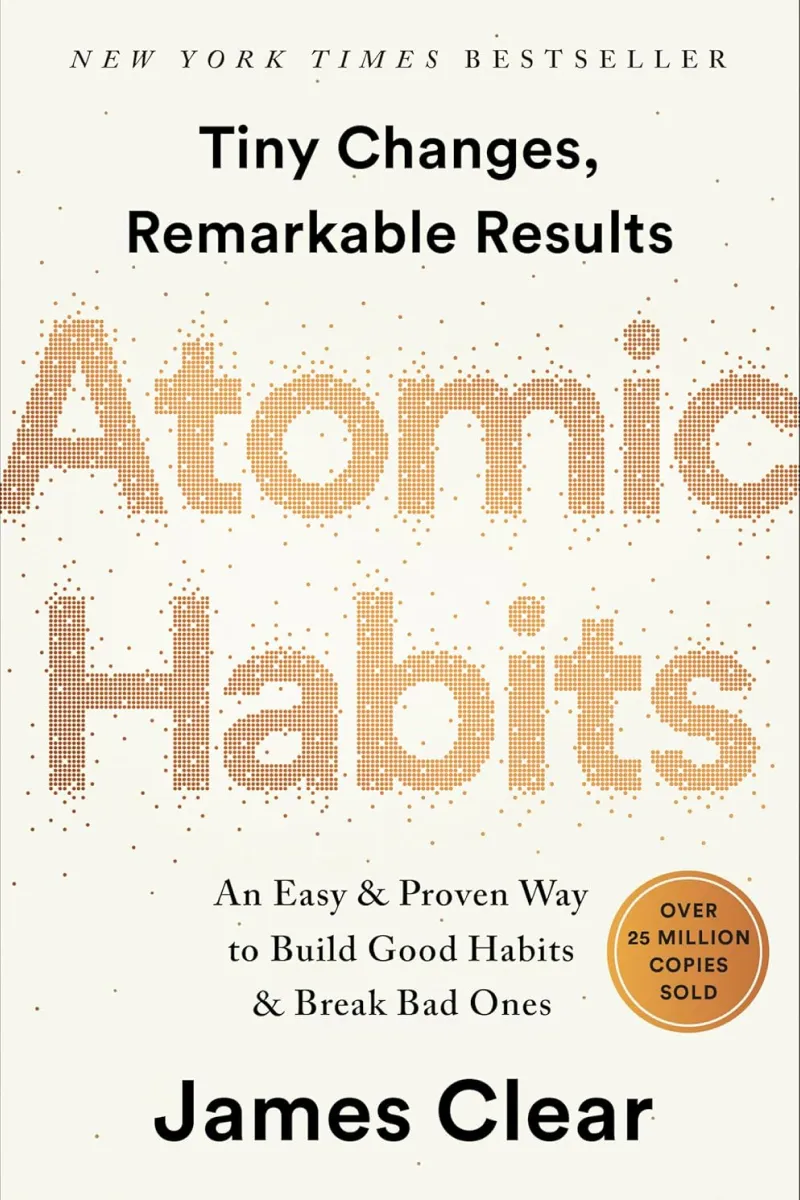
If you’re new to the format, What Is Voice Journaling? A Beginner’s Introduction covers the basics. For building the habit consistently enough to see real benefits, How to Build a Daily Habit That Actually Sticks has everything you need. And if you want to explore the connection between daily reflection and mental wellbeing more broadly, Daily Mental Wellness Practices goes deeper on the evidence and the practice.
This section contains affiliate links.
Go Deeper
You've been thinking about this long enough.
Ten seconds. Your voice. That's all it takes.
Inner Dispatch turns a single daily recording into something you can actually see - a living reflection of where you've been.
Start free. No writing required. →Related articles

The Complete Guide to Voice Journaling
Everything you need to know about voice journaling: what it is, why it works, and how to start an audio journal practice that actually sticks.

What Is Voice Journaling? A Beginner's Introduction
Discover what voice journaling is, how it works, and why speaking your thoughts beats writing them. A complete beginner's guide to starting an audio diary.
How to Build a Daily Habit That Actually Sticks
A science-backed guide to building daily habits that last — covering the psychology of habit formation, why most habits fail, and the specific techniques that actually work.

Daily Mental Wellness Practices: An Evidence-Based Guide
The complete guide to daily mental wellness practices—evidence-based habits for emotional regulation, self-awareness, and resilience that fit into real life.